


Early & Accurate Disease Detection in Dairy Cattle
Free Bilingual Online Training for use by Dairy Farm Workers, Managers, and Veterinarians
Language
This free, evidence-based online training program designed to strengthen antimicrobial stewardship, improve early disease detection, and support farm-specific protocols. The course is available in English and Spanish and is designed for flexible on-farm implementation with veterinarian-led facilitation.
What you will learn | Course certificate | Facilitator and farm integration | Step-by-step instructions on accessing the course | Contact
Free Training Program for Dairy Workers
Now in English & Spanish! 🐄
Looking to improve dairy worker training and compliance? We've got you covered.
The Early and Accurate Disease Detection in Dairy Cattle course offers 6 practical, research-based modules covering: ✅ Visual exams ✅ Mastitis treatment ✅ Metritis care ✅ Lameness management ✅ And more!
Developed by UC Davis, The Ohio State University, UCANR Cooperative Extension, CA Dept. of Food & Agriculture, and dairy industry partners, this program is designed to boost animal health and antimicrobial stewardship.
Resource Quick Links
- Moodle mobile app download
- Dairy Educational Resources YouTube Channel (information about how to access the free training program and create a login)
- LinkedIn Group
What You Will Learn (Six modules):
Module 1: Antibiotic Resistance
Module 2: Visual Exam for Disease Identification
Module 3: Lameness
Module 4: Mastitis
Module 5: Metritis
Module 6: Treatment Protocol Concepts

Certificate:
Complete all six modules to receive a certificate of completion.
How to Access the Course (step-by-step):
1. Create an account at the Extension Foundation site: https://campus.extension.org/login/index.php
2. Search for the course by name or use the English or Spanish links above and click "Enroll me."
3. Use a web browser or the Moodle mobile app (site: campus.extension.org) to view modules on phones, tablets, or computers.
4. If using the Moodle app, install from https://download.moodle.org/mobile and enter campus.extension.org when prompted.
For a indept guide, access a video outlining this processs at our youtube channel.
Suggested On-Farm Training Framework (4 sessions):
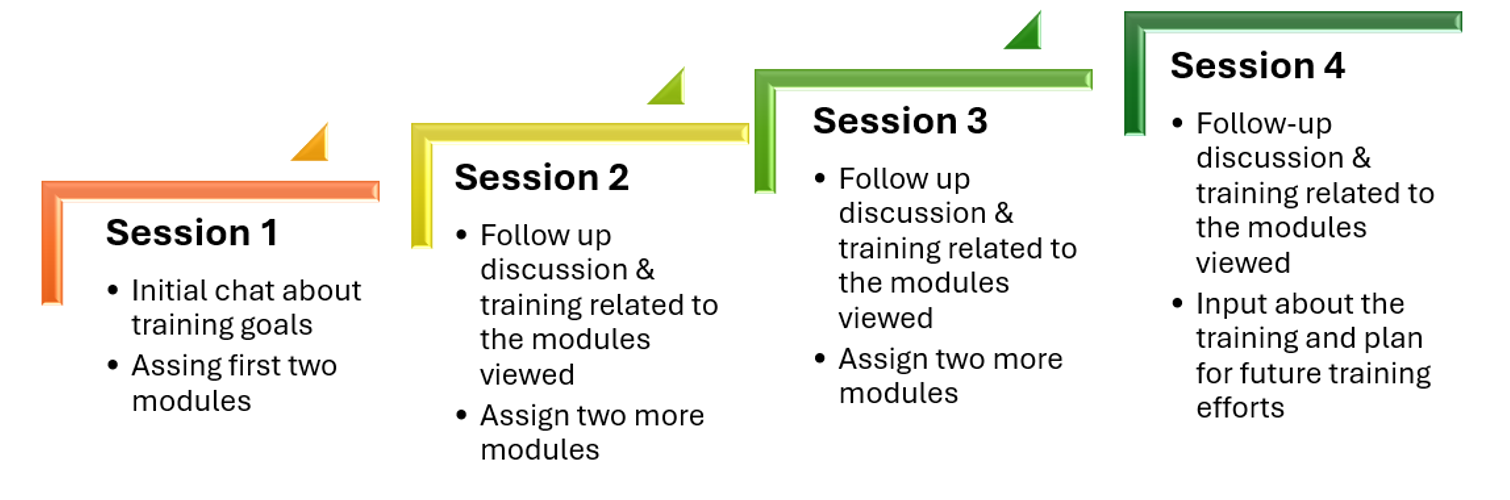
Facilitator Role and Farm Integration:
Facilitator
Veterinarian or experienced farm staff should lead discussions and cow-side training to reinforce concepts and align learning with farm SOPs.
Farm SOPs
Use the training to support complience with farm SOPs for disease identification, treatment decision making, and drug administration policies, supporting and maximixing veterinary-client-patient relationships.
Program Partners & Support
Program Partners: University of California, Davis Sanford I. and Joan Weill School of Veterinary Medicine; The Ohio State University College of Veterinary Medicine; Antimicrobial Use and Stewardship Branch, California Department of Food and Agriculture


This program was a recipient of the 2025 Recognition of good practices and innovations in sustainable livestock transformation, One Health, animal health, and Reference Centres.

Funding provided by the Antimicrobial Use and Stewardship (AUS) Branch of the California Department of Food and Agriculture, the USDA National Institute of Food and Agriculture, and the Edward E. Hills Fund for Educational Outreach for the Human Treatment of Food Animals. Any opinions, findings, conclusions, or recommendations expressed in this publication are those of the author(s) and do not necessarily reflect the view of the funding agencies.


Contact
If you have questions about the course, please contact the instructors: Greg Habing at [email protected] or Richard V. Pereira at [email protected].