



Federal Research Funding Advances Animal and Human Health
Why federal funding matters
The path from discovery to treatment is rarely short or predictable. It requires sustained investment at every stage—from understanding how health and disease work, to testing promising ideas in translational models, to bringing potential treatments to patients.
DISCOVER
Basic research reveals the mechanisms that shape health and disease.
TRANSLATE
Preclinical validation tests new innovations for possible clinical application.
DELIVER
Clinical studies move promising approaches toward animal and human patients.
When funding is interrupted ...
experiments are suspended. Specialized teams disperse. Promising treatments are delayed. Early-career scientists lose essential training opportunities. Because every stage depends on the one before it, a disruption anywhere slows the entire pathway.
When America invests in veterinary research ...
the benefits reach far beyond the laboratory. That investment protects the animals in our homes, strengthens agriculture, prepares us for emerging diseases and creates discoveries that improve human health.

$400M+
EXTRAMURAL RESEARCH FUNDING 2020–2025
250+
CLINICAL AND BASIC-SCIENCE INVESTIGATORS
4,000+
RESEARCH PUBLICATIONS 2020–2025
From Discovery to Impact
At the UC Davis Weill School of Veterinary Medicine, federally funded basic science builds knowledge. Translational research then draws on naturally occurring diseases in animals—many resembling diseases in people—to advance prevention, diagnosis and treatment across species.
Basic Science
Building the Foundation
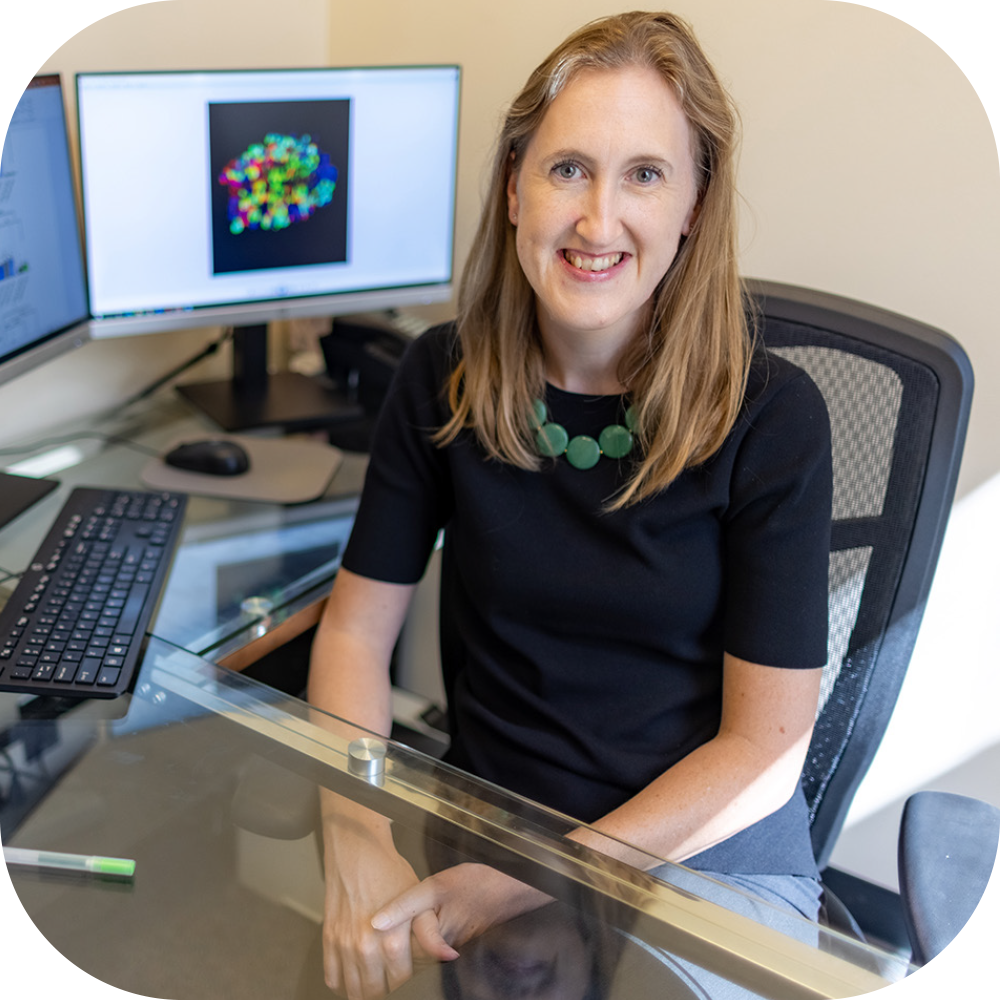
Revealing How Parasites Survive
Jeroen Saeij uses genome-wide CRISPR screening to identify genes that help Toxoplasma gondii survive, invade cells and evade immunity. NIH support is establishing a foundation for better vaccines and prevention strategies.
Uncovering Pathways to Stronger Bones
Clare Yellowley-Genetos and Damian Genetos study how oxygen-sensing pathways regulate bone formation. NIH-funded discoveries could ultimately inform regenerative treatments for osteoporosis and fractures.
Rethinking Blood-Sugar Control
Bethany Cummings studies how pancreatic cells communicate and regulate glucagon and GLP-1. Her NIH-supported work is reshaping pancreatic biology and may guide future diabetes treatments.


Translation Research
Turning Knowledge into Impact
Developing Cancer Treatments Across Species
In an NCI-sponsored trial, dogs with cancers that had spread to their lungs received inhaled IL-15 immunotherapy. Lola, a golden retriever with metastatic melanoma, became cancer-free—generating knowledge for canine and human care.
Advancing HIV Prevention and Treatment
Koen Van Rompay and other UC Davis scientists use federally supported nonhuman-primate models to understand HIV transmission and persistence and to evaluate antiviral drugs and prevention approaches.
Studying Vision Loss in a Model Closer to People
UC Davis researchers are developing a federally funded nonhuman-primate model of inherited optic neuropathy. A model that more closely replicates the human optic nerve could improve understanding and assessment of potential therapies.
