


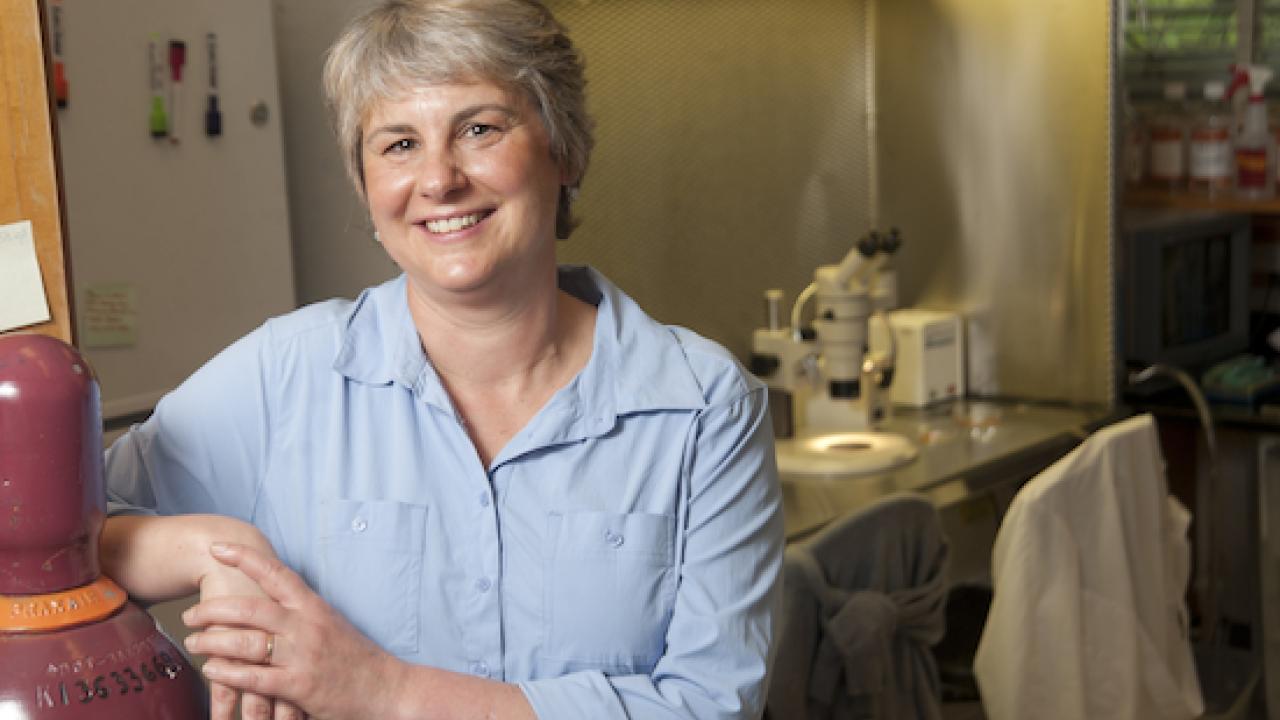
Pamela J. Lein Receives 2026 SOT Distinguished Toxicology Scholar Award
This award recognizes an SOT member who has made seminal and substantial scientific contributions to the understanding of the science of toxicology and is actively involved in toxicological research.

In recognition of a long-standing career of influential scientific contributions to neurotoxicology and her seminal work defining how environmental exposures and gene–environment interactions disrupt nervous system development and function, Pamela J. Lein, PhD, is presented with the 2026 SOT Distinguished Toxicology Scholar Award.
Dr. Lein received her BS from Cornell University, MS from East Tennessee State University, and PhD in pharmacology and toxicology from the State University of New York at Buffalo, followed by postdoctoral training at Roswell Park Cancer Institute. She held faculty positions at Johns Hopkins University and Oregon Health & Science University before joining the University of California Davis (UC Davis) in 2008, where she became Professor of Neurotoxicology in 2010, Distinguished Professor of Neurotoxicology in 2025, and has served as Department Chair since 2018.
Dr. Lein is internationally recognized for pioneering mechanistic studies that have reshaped the understanding of how environmental chemicals perturb neuronal connectivity and neurodevelopment. Her research has explained how polychlorinated biphenyls and related persistent organic pollutants alter calcium signaling, activate ryanodine receptors, and disrupt dendritic growth and synaptogenesis, thereby providing critical insight into how developmental exposure to these compounds contributes to neurodevelopmental disorders, including autism spectrum disorder. Her work has further demonstrated how genetic susceptibilities interact with toxicant exposures to modify risk and severity of neurologic disease, advancing the field’s framework for gene–environment interactions in brain development and function.
Dr. Lein has also made major contributions to translational neurotoxicology and chemical threat preparedness. As Director of the UC Davis CounterACT Center of Excellence, she leads multidisciplinary teams developing therapeutics and tools to prevent or mitigate the chronic neurological consequences of organophosphate nerve agent and pesticide intoxication, including novel seizure countermeasures and imaging approaches for early detection of brain injury. Her research program addresses additional high-priority public health concerns, such as the mechanisms by which traffic-related air pollution and ultrafine particles exacerbate Alzheimer’s disease–relevant phenotypes and how persistent pesticides and other environmental contaminants contribute to neurodegenerative and seizure disorders. The Lein Lab has been continuously funded by the US National Institutes of Health since 1997 and is currently supported by multiple NIH institutes through various awards.