


Livestock Veterinarians Save Sheep Bitten by Rattlesnake
“Case of the Month” – November 2026
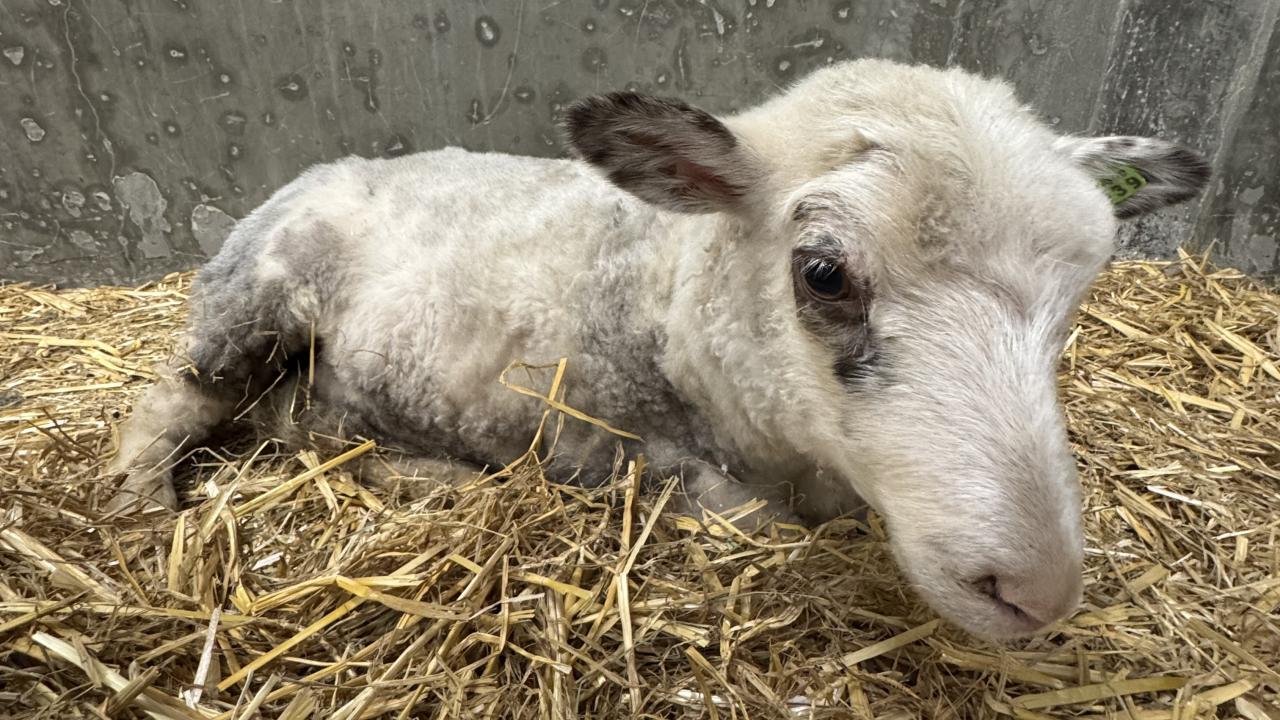
“She was not in a good state. Her head and neck were swollen two times her normal size, and her eyes were bulging out.”
This was Kate Miller’s description of her Shetland lamb Hazel one evening this past September.
“I was bringing the sheep in for the night, and I noticed Hazel down,” said Miller. “As I got closer, I could see her head was swollen. She managed to get to her feet, but you could tell something extreme was happening.”
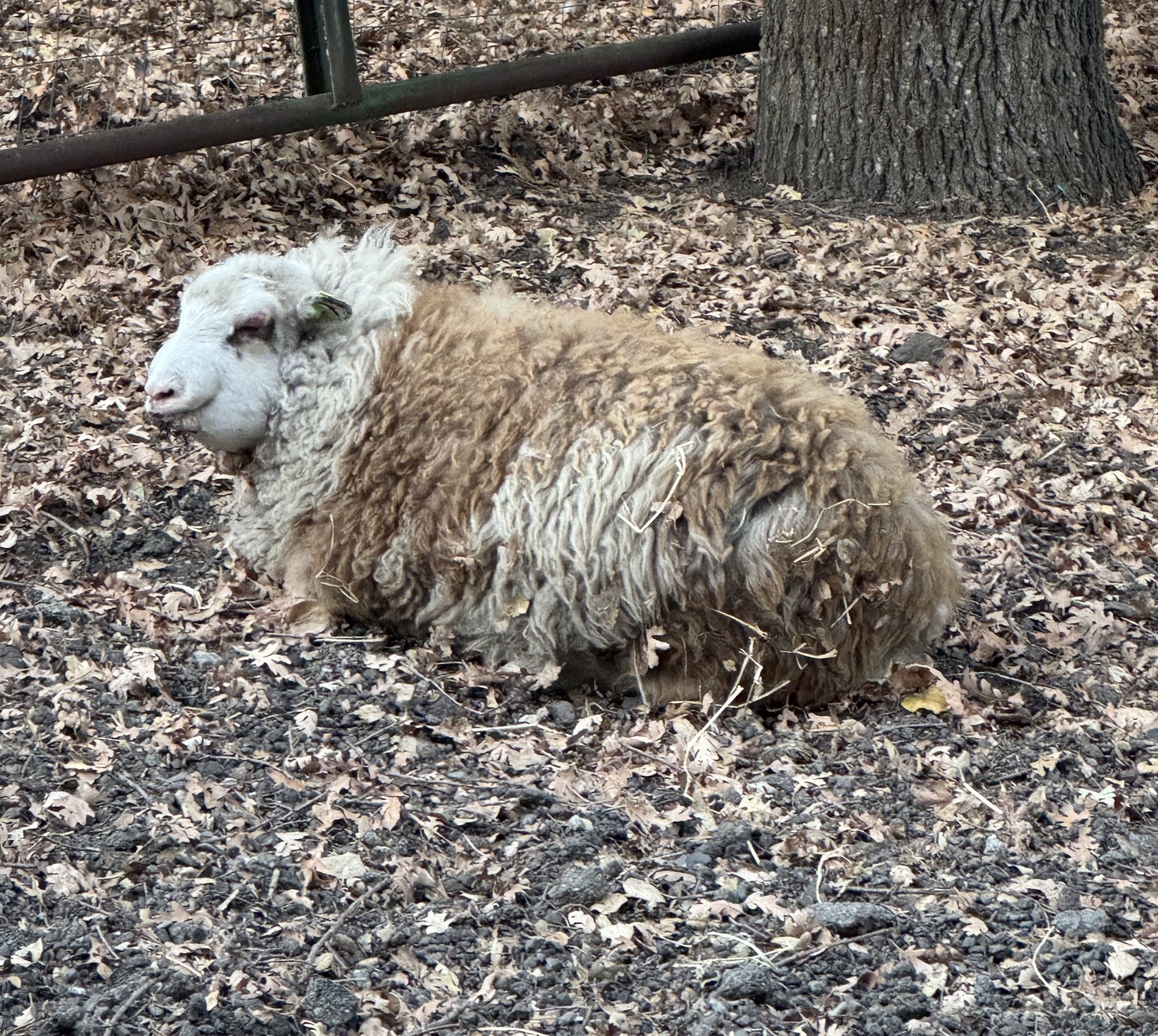
Miller, an experienced large animal owner with horses and goats, recently purchased Hazel and another lamb for them to produce wool for her child’s knitting and crochet projects. A typical Shetland sheep can produce about 2 to 4 pounds of wool each year, so Miller thought it would be fun to raise a few and experience the multi-step process of turning raw sheep’s wool into yarn.
But before Hazel could even produce her first fleece, it appeared she was bitten by a snake.
“I saw a young rattlesnake on the property a few months before, so I assumed that’s what happened,” said Miller.
With few ruminant veterinarians near her in the eastern Bay Area, Miller knew her best option to save Hazel was to get her to the UC Davis Large Animal Hospital as soon as possible.
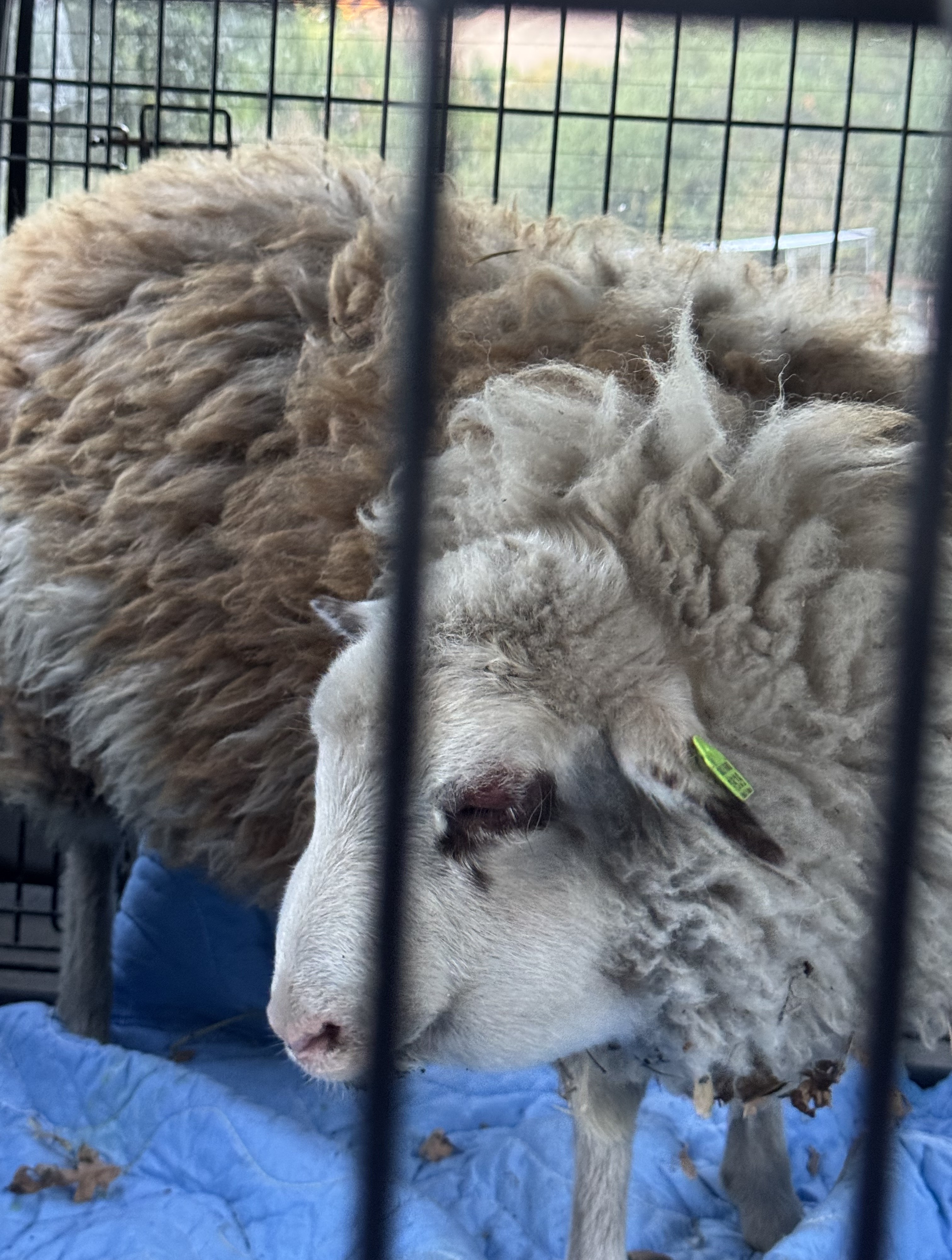
“We’ve been bringing animals to UC Davis for nearly 20 years, and our experiences have always been great,” said Miller, who loaded Hazel in her car for the 50-mile drive to campus. “I called UC Davis on the way because it was clear Hazel was not going to survive without immediate assistance.”
Hazel was nearly comatose upon arrival at the hospital. Her heart rate was elevated, and there was a large build-up of fluid underneath her jaw. Showing signs consistent with a snakebite, Hazel was given antivenom, antihistamine, anti-inflammatory drugs, and IV fluids. Her condition was critical, and she had rapid shallow breathing.
The next day, Hazel was still lethargic, unable to stand or hold her still-swollen head up normally. Her care team was deeply concerned she may not survive, but they continued intensive supportive care.
On the third day, while the swelling showed minor signs of improvement, Hazel had reduced consciousness of her surroundings and clear signs that her brain was involved. She had not gotten to her feet since initial hospitalization. At this point, the team re-evaluated her care with a new plan targeted toward addressing her neurologic status and brain inflammation rather than the snakebite. Additionally, Dr. Meera Heller, chief of the Livestock Medicine and Surgery Service, began acupuncture treatment while Dr. Chloe Bening, a second year large animal medicine resident, focused on supportive care.
“With these cases of envenomation and neurologic involvement, supportive care is the mainstay of our treatments,” said Dr. Bening. “In Hazel's case, this involved continuing with the medications and IV fluids and assisting her to eat, as well as assisting her to stay in sternal recumbency.”
That evening, Hazel’s breathing improved, and she started eating grass that was placed in front of her mouth. However, the team still needed to see more signs than this that she was going to continue improving, especially since she still had not stood up.

“We needed to see that she was going to walk again,” said Alice Kim, a fourth-year DVM student on rotation with the Livestock Medicine and Surgery Service during Hazel’s illness.
That hope came when Hazel started to spontaneously move her back legs and kick around on the fourth day. By that evening, her facial swelling had improved, and she was able to hold her head up and eat from a bowl. She also appeared more alert.
“Once Hazel was able to hold her head up, we were able to initiate physical therapy,” said Dr. Bening. “This helped her regain function of her legs and trunk muscles.”
Kim’s main responsibilities with Hazel focused on recumbency care such as turning her over, keeping her clean, testing reflexes, and paying close attention to her everyday mannerisms to see if she was making any progress.
“Once we noticed she had motor tone in her back legs, we started to do physical therapy,” said Kim. “She was also gaining some strength in her trunk. Each day, I started to notice more improvements – she was able to move her head, movement of her ears and eyes so we knew she was tracking movement and sound, and improved vocalization.”
A physical therapy activity that Hazel seemed to enjoy was an inflatable ball used to support her. When up on the ball, she would eat happily and begin to use her legs.
On the sixth day, Hazel got to her feet on her own but struggled to walk due to muscle contractures in her hind limbs. Livestock resident Dr. Amanda Mulholland placed splints on both rear limbs, and Hazel stood without support. The next day, she started playfully running around her stall with the splints staying in place. By the eighth day, the contractures were resolved, and she was able to stand and walk on her own.
“Hazel made remarkable progress in the last 48 hours of her hospitalization,” said Dr. Mullholland. “We were relieved to finally provide a good prognosis of recovery to her owner and discharge her home.”
“I truly believe Hazel recovered due to the extensive supportive care that our technicians and student Alice gave her,” stated Dr. Bening. “The hand feeding, the range-of-motion exercises, and keeping her body in an appropriate position to reduce the side effects of being down were key factors in her recovery.”
Kim plans to practice small animal medicine but was glad she elected to include a large animal rotation at the teaching hospital into her final year of studies.
“Livestock medicine was such a neat rotation to gain hands-on experience,” said Kim. “During my two weeks, I helped with a laceration repair on a cow, scrubbed into a bladder stone surgery on a goat, helped reduce a uterine prolapse from a cow that had recently calved, and assisted with another snake envenomation besides Hazel. It was interesting to compare those two cases and the treatment plans for both. Hazel was the miracle case that left my rotation on a high note.”
“Alice was very involved in Hazel’s care and instrumental in her recovery,” said Dr. Heller. “She certainly made the most of her time on her voluntary large animal rotation. I was proud to see a small animal-focused student excel in a large animal environment. It says a lot of Alice as a student and also of the school’s ability to offer hands-on experiences that excite students to go beyond their familiarity.”
Now six weeks following discharge, Miller reports Hazel is recovering well. She is excited to soon share a new experience of the shearing process with her child and a community of neighbors who also have sheep.
# # #
