A recently published paper in Marine Mammal Science documented the migratory journey of a female southern right whale (SRW) named Atenea who undertook a unique journey. After she left Península Valdés with her calf she did something unexpected.
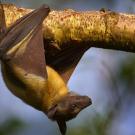
Bats are widely recognized as the primary hosts of filoviruses, such as Ebola, yet the specific host species of ebolaviruses are not definitively known. In a study led by the University of California, Davis, and the Albert Einstein College of Medicine (Einstein), scientists have developed a new tool to narrow down potential host species of filoviruses and better prioritize wildlife surveillance. The research is part of global efforts to prevent viral spillover between animals and humans.
Adapted from an article by the Wildlife Conservation Society
Dr. Pranav Pandit, a veterinary epidemiologist with the UC Davis School of Veterinary Medicine, helped launch a new Pandemic Prevention Leadership Initiative earlier this year. The program—a collaboration with the Wildlife Conservation Society (WCS), and EpiEcos—was funded by the US Department of State’s Bureau of International Security and Nonproliferation.
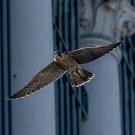
An assessment completed this week at the UC Davis School of Veterinary Medicine determined that pneumonia caused the Oct. 23 death of Nox, the youngest member of UC Berkeley’s well-known falcon family.
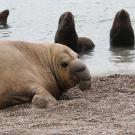
The sounds of barking elephant seals are again in the air along the breeding grounds of Península Valdés, Argentina—but it’s quieter. Roughly a year after a massive outbreak of H5N1 highly pathogenic avian influenza killed more than 17,000 elephant seals, including about 97% of their pups, scientists estimate that only about a third of the elephant seals normally expected here returned.
Researchers at the University of California, Davis, One Health Institute, or OHI, have been awarded $28 million to lead a novel human vaccine trial against Rift Valley fever virus in Africa.
If infected with the Ebola virus, less than 20% of endangered mountain gorillas living in Africa’s Virunga Massif region would be expected to survive more than 100 days past the first confirmed case.
CBS News correspondent Bill Whitaker joined UC Davis virus hunters in the field to learn about their search for new pathogens to help prevent the next pandemic.
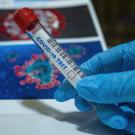
While COVID-19 has been racing through much of the human population, the SARS-CoV-2 virus has also turned up in other mammals. This leads to many questions.