



New UC Davis Center Unites Human and Veterinary Medicine to Advance Brain Tumor Care
The UC Davis Translational Brain Tumor Center launches with Discovery Summit focused on accelerating treatments for people and pets
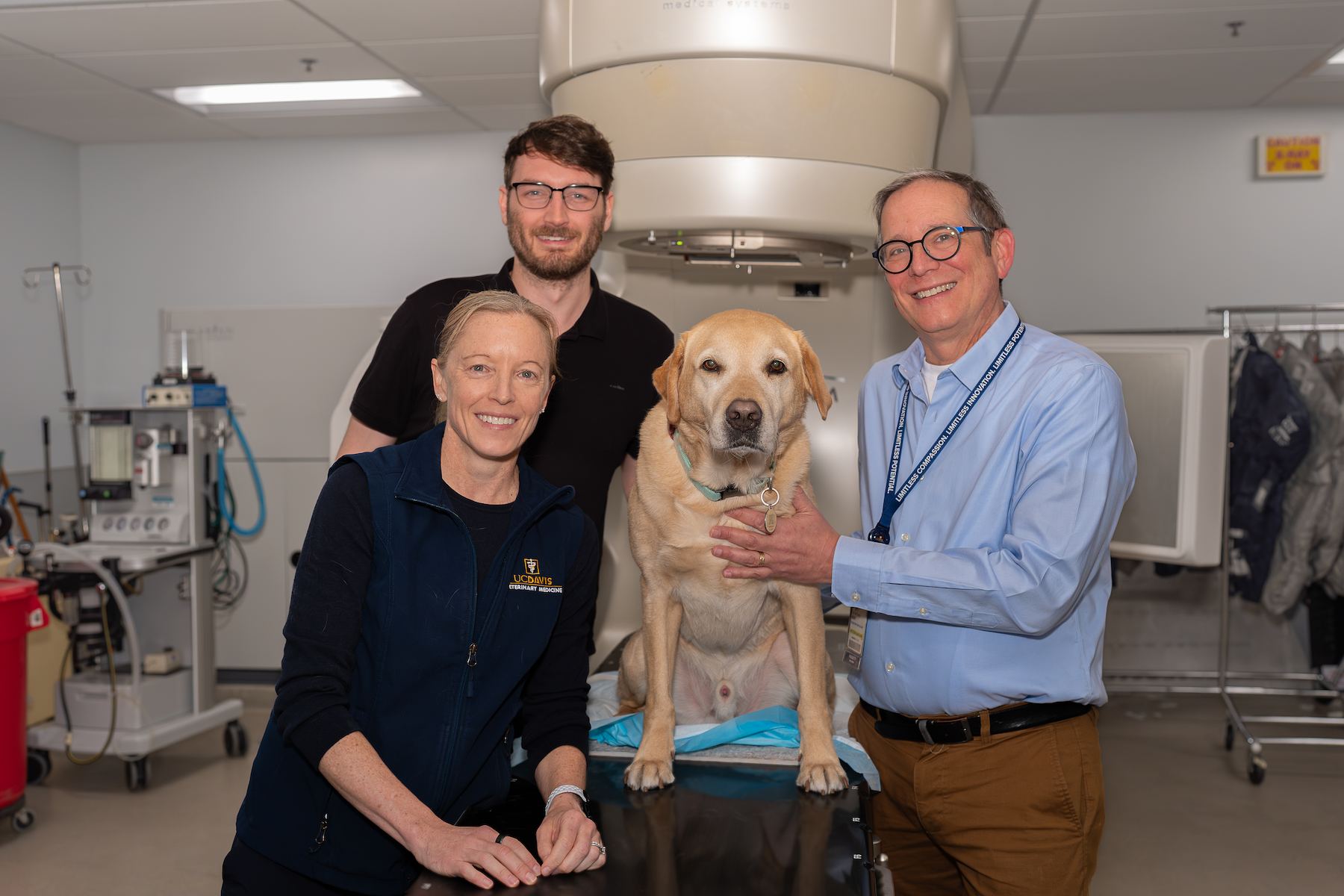
Some of the most difficult cancers to treat occur in the brain. Despite decades of research, outcomes for many children, adults and companion animals with aggressive brain tumors have improved little.
UC Davis is bringing together experts from human and veterinary medicine to help change that trajectory.
The new UC Davis Translational Brain Tumor Center officially launched Sept. 10 with a Discovery Summit at the UC Davis Weill School of Veterinary Medicine. The event convened veterinarians, physicians, neuroscientists, cancer researchers and therapeutic-development experts to identify opportunities for collaboration and begin building a shared research and clinical roadmap.
Dr. Orin Bloch, director of the Brain Tumor Program in the UC Davis Comprehensive Cancer Center and professor of neurological surgery, joined Dr. Michael Mison, associate dean for Veterinary Medical Center operations and chief veterinary medical officer, in opening the summit and endorsing its collaborative mission.
“This center is something very exciting for us in the brain tumor research and treatment field,” said Bloch, “and something that is elevating UC Davis to the next level.”
“Ultimately, success from this center will come back to the patient,” said Mison. “It’s the day when a family sitting across from one of our clinicians hears something they might not hear today: ‘We now have better options.’ That’s why this matters.”
A Center Built Across Disciplines
The center is designed to bridge the longstanding gap between discoveries made in the laboratory and treatments that reach patients. Its approach centers on naturally occurring brain tumors in companion animals—particularly dogs—which can provide critical insights into similar cancers in people while expanding access to advanced care and clinical trials for veterinary patients.
The center’s leadership brings together four complementary areas of expertise: veterinary neuro-oncology, veterinary radiation oncology, human neuro-oncology and therapeutic development. The core leadership includes:
• Christine Toedebusch, director, veterinary clinician-scientist specializing in veterinary neurology and comparative neuro-oncology
• Jessica Lawrence, deputy director, veterinary clinician-scientist specializing in veterinary medical oncology and radiation oncology
• Orwa Aboud, associate director of translational neuro-oncology, neuro-oncologist and physician-scientist focused on advancing innovative diagnostics and therapeutics for patients with primary brain tumors
• Yuanpei Li, associate director of therapeutic development, scientist developing innovative nanomedicine platforms, cancer therapeutics, and molecular imaging agents for the treatment of cancer in human patients and companion animals
In addition, Tayla Regenbaum, DVM serves as the inaugural Neuro-Oncology Clinical Trial Intern for the center.
Together, the team is building a multi-species framework in which discoveries can move between laboratory studies, veterinary clinical trials and human medicine, while collaborating across the entire university and with external partners.
“We have remarkable expertise across UC Davis. The greatest advances will come from connecting that expertise around shared questions,” Toedebusch said. “The center creates a structure for investigators and clinicians to work together from the beginning rather than waiting until a discovery is ready to be handed from one field to another.”
Benefitting Dogs and Humans
Most early-stage cancer research relies on laboratory models, but those models do not always accurately predict whether a treatment will work in patients.
Companion dogs naturally develop brain tumors that share important features with human cancers, including genetic alterations, patterns of tumor growth, neurological symptoms, treatment resistance and interactions with the immune system. Dogs also live in the same environments as people and represent a more genetically diverse patient population than laboratory animals.
Studying naturally occurring tumors in dogs therefore gives researchers an opportunity to evaluate new diagnostics and treatments under real-world clinical conditions. At the same time, participating dogs gain access to advanced imaging, specialized care and promising investigational therapies.
The result is research intended to benefit both ends of the leash: better options for families whose pets develop brain tumors and a more effective path for translating discoveries into human clinical care.
From Discussion to a Research Roadmap
The summit’s keynote speaker, John Rossmeisl of the Virginia-Maryland College of Veterinary Medicine, has spent more than two decades studying the mechanisms of brain tumor formation, developing methods for delivering drugs to brain tumors and conducting clinical trials in dogs with brain cancer. His presentation used his experience to provide perspective on moving comparative medicine in brain tumor research toward clinical application.
The program also featured perspectives from Aboud, Li and Lawrence on human neuro-oncology, drug development for central nervous system tumors and the integration of companion dogs into UC Davis research.
Participants then moved into four side-by-side working groups focused on:
• Systemic therapies in neuro-oncology
• Neurosurgical and imaging-device interventions
• Biobanking and biomarkers
• Brain tumor disease mechanisms
Rather than concluding with broad expressions of support, each group was asked to identify concrete deliverables and commitments. The center’s leadership team is now reviewing those recommendations and developing the next steps for collaborative projects.
Clinical Trials Already Underway
The center launched with clinical research already in progress. Two National Cancer Institute-funded trials are currently recruiting dogs diagnosed with or suspected of having glioma.
The CARE trial is evaluating an experimental drug intended to make glioma cells more vulnerable to radiation therapy. The PRISM trial is tracking the progression of canine gliomas and combining clinical information with genetic and immune profiling to identify tumor subtypes that could eventually support more personalized treatment for dogs , and more precise translation to human patients.
Both studies illustrate the center’s broader purpose: providing high-level care and new options for veterinary patients while generating knowledge that may accelerate progress against brain tumors across species.
The center also supports advanced imaging, molecular research, biobanking, multidisciplinary clinical care and education in comparative neuro-oncology.
“The symposium showed what is possible when people who approach brain tumors from different directions come together around the same table,” Toedebusch said. “Now the work is to turn that energy into collaborations that improve survival and quality of life for both human and veterinary patients.”
Learn more about the UC Davis Translational Brain Tumor Center and its current canine brain tumor clinical trials.
Read UC Davis News announcement of this center launch.
# # #