When the H5N1 highly pathogenic avian influenza virus was discovered on a poultry farm in Asia in 1996, there was little indication that it would become so widespread and so destructive. Within 30 years, it reached every continental region except Oceania, infecting more than 400 million poultry, tens of thousands of elephant seals and sea lions, about 1,000 people and many other mammals and wild birds.
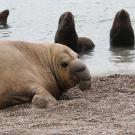
Pinnipeds, which include seals and sea lions, have been hit unusually hard by the virus.
UC Davis’ unique integration of human and animal health expertise has given a fluffy, friendly kitten a chance at survival — and opened the door to ideas that could someday help human patients.
When Erin Cooper noticed her Maine Coon kitten Viggo had an oversized head, she never imagined it meant something serious. But an MRI revealed feline hydrocephalus: a buildup of fluid inside the brain that is often fatal.
Ecological medicine is a new approach to health science that draws on a very old idea: connecting with each other, with animals and plants, and with the natural world fosters health and well-being for people and the planet.
“Everything you suspected was good for you -- fresh air, trees, animal companions, purpose, reciprocity -- turns out to have peer-reviewed backing,” said Rebecca Calisi Rodríguez, associate professor of neurobiology, physiology and behavior and director of the Green Care Lab at the University of California, Davis.

Dr. Michael Lairmore and Dr. Michael Wilkes—two UC Davis-affiliated thought leaders in veterinary medicine and global health—have just released a new book, Belonging to Earth: One Health Stories to Save Our Planet and Ourselves (Cambridge Scholars Publishing). Lairmore is dean emeritus of the School of Veterinary Medicine. Wilkes is director of global health and professor of medicine at the School of Medicine, and senior medical correspondent for KCRW/NPR.
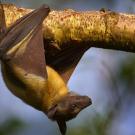
Bats are widely recognized as the primary hosts of filoviruses, such as Ebola, yet the specific host species of ebolaviruses are not definitively known. In a study led by the University of California, Davis, and the Albert Einstein College of Medicine (Einstein), scientists have developed a new tool to narrow down potential host species of filoviruses and better prioritize wildlife surveillance. The research is part of global efforts to prevent viral spillover between animals and humans.
The sounds of barking elephant seals are again in the air along the breeding grounds of Península Valdés, Argentina—but it’s quieter. Roughly a year after a massive outbreak of H5N1 highly pathogenic avian influenza killed more than 17,000 elephant seals, including about 97% of their pups, scientists estimate that only about a third of the elephant seals normally expected here returned.
Since 2022, a new, highly pathogenic strain of H5N1 influenza or “bird flu” has spread worldwide. In the U.S. it has affected over 100 million birds and for the first time, spread into dairy cows and a small, but growing, number of people. At UC Davis, experts in One Health — an approach that considers the health of people, animals and the environment together — are on high alert.
Nothing but death
Dead silence met Marcela Uhart and her team when they arrived at the elephant seal colony at Punta Delgada, Patagonia on Oct. 10, 2023.
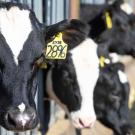
Dairy cows in California have a new requirement meeting them: a negative test for H5n1 or “bird flu.”
These tests are handled by the California Animal Health and Food Safety Laboratory System – the backbone of California's warning system that helps to protect the health of California's livestock and, thereby, the lives of Californians.
Vice Provost Dr. Jonna Mazet was awarded the K. F. Meyer/James H. Steele Gold-Headed Cane by the American Veterinary Epidemiology Society (AVES). The prestigious award dates to 1964 and recognizes career accomplishments and contributions to veterinary epidemiology, public health, and One Health.