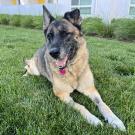
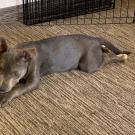
Sometimes, people are just in the right place at the right time. Thankfully for Aika, neurologist Dr. Christine Toedebusch happened to be in the Emergency Room at the UC Davis William R. Pritchard Veterinary Medical Teaching Hospital (VMTH) when the 5-year-old corgi arrived. While she was checking on another patient, Dr. Toedebusch noticed Aika from across the room.
This article first appeared in the Spring 2026 issue of Synergy magazine
Luna is back to work as a certified therapy dog—bringing her calm nature to healthcare centers, schools, airports, and other places—after neurosurgery to remove a difficult-to-access brain tumor. The 9-year-old Maltese was the first patient enrolled in a clinical trial investigating fluorescence-guided surgery to remove canine brain tumors.
UC Davis’ unique integration of human and animal health expertise has given a fluffy, friendly kitten a chance at survival — and opened the door to ideas that could someday help human patients.
When Erin Cooper noticed her Maine Coon kitten Viggo had an oversized head, she never imagined it meant something serious. But an MRI revealed feline hydrocephalus: a buildup of fluid inside the brain that is often fatal.
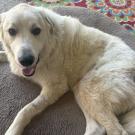
Newborn puppies will often wrestle and roughhouse with each other. More often than not, it all results in good fun. But one such incident with 6-week-old Kailana indicated to her owners John Hartmire and spouse Christine Pobanz-Stelter that there could be something seriously wrong with their golden retriever.
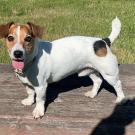
Scramble, a Jack Russel terrier, was diagnosed with a brain tumor, most likely a meningioma, and treated at the UC Davis Veterinary Medical Teaching Hospital. He received a course of stereotactic radiotherapy which shrank the tumor and has helped him maintain a high quality of life for more than three years.
When Flynn, an approximately 1-year-old male neutered Great Pyrenees, arrived at the UC Davis William R. Pritchard Veterinary Medical Teaching Hospital (VMTH), he had visible tire tracks across his back leg and abdomen. The City of Stockton Animal Services Center reported he was run over by a car and thrown into a ditch. Knowing Flynn needed specialty care, the Yolo County Spay and Neuter Group agreed to take him and immediately brought him to UC Davis.
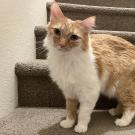
Cub, a 2-year-old orange domestic longhair cat, was far too young to be acting so lethargic last May. He was sleeping more and was less active than the other cats in the household. His owner, Grace Jesensky, also noticed his breathing was abnormal, and his primary veterinarian suspected he had asthma.
The UC Davis veterinary hospital has launched a Neurosurgery Specialty Service aimed at adapting state-of-the-art surgical solutions to complex neurological conditions.
This new service offers state-of-the-art neurosurgical interventions and clinical trials, including:
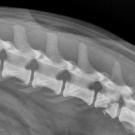
After a congenital anomaly paralyzed him, Ghost was able to walk again after successful neurosurgery to decompress his spine, allowing his spinal cord to function properly again.