Dr. Rachel Hanford, a third-year resident in medical oncology received the Edward L. Gillette Memorial Award for Outstanding Research Poster Presentation, presented recently at the annual Veterinary Cancer Society Conference.
Some of the most difficult cancers to treat occur in the brain. Despite decades of research, outcomes for many children, adults and companion animals with aggressive brain tumors have improved little.
UC Davis is bringing together experts from human and veterinary medicine to help change that trajectory.
Bella, a 4-year-old female pit bull terrier mix, was diagnosed with an infiltrative lipoma in her right shoulder area in early 2025. Owners Paul and Kristy Lewis took her to two surgeons to discuss removal of the lipoma, a benign tumor of fatty tissue. Infiltrative lipomas can invade into local structures including the surrounding muscles. On Bella, the tumor was infiltrating the muscle down to the humerus bone and was continuing to grow. This made complete surgical excision nearly impossible.
By the time Wednesday, a now 9-year-old female German Shepherd mix, was rescued by Steve Napolitano in 2021, she had already been placed in a kill shelter and rejected by two families, only to be diagnosed with cancer after finally finding happiness in a safe home.
After seeing multiple specialists about the oral malignant melanoma diagnosed in her right jaw, Wednesday ultimately landed at the Oncology Service at the UC Davis William R. Pritchard Veterinary Medical Teaching Hospital in early 2025.
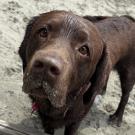
Snickerdoodle, a 5-year-old chocolate English Labrador retriever, was diagnosed by her primary veterinarian with a mammary carcinoma following a litter in 2024. She underwent surgery with that veterinarian for mammary mass removal and a spay procedure. The histopathology report noted that the tumor was malignant, but there were no signs of metastasis at that time.
She was referred to the Medical Oncology Service at the UC Davis William R. Pritchard Veterinary Medical Teaching Hospital (VMTH) for further evaluation and potential follow-up treatment.
Dr. Jaeyoung Kim, a third-year medical oncology resident, won the Robert S. Brodey Memorial Award at the 2025 Veterinary Cancer Society (VCS) Annual Conference held recently in Salt Lake City, Utah.
The award recognizes an outstanding oral research presentation. At the conference, Dr. Kim presented her original research “High-Grade, Stage 1 Mast Cell Tumors: Outcome and Prognostic Factors in 63 Dogs Treated With Local Therapy and Adjuvant Chemotherapy.”
Scientists at the University of California, San Francisco and the University of California, Davis have completed the first clinical trial of a new cancer drug in pet cats, offering hope for a disease that has long been nearly impossible to treat. The study found 35 percent of the cats with squamous cell carcinoma who received treatment had their disease controlled with minimal side effects. The drug will likely be effective for humans with head and neck squamous cell carcinoma. The study was published today in Cancer Cell.
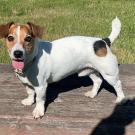
Scramble, a Jack Russel terrier, was diagnosed with a brain tumor, most likely a meningioma, and treated at the UC Davis Veterinary Medical Teaching Hospital. He received a course of stereotactic radiotherapy which shrank the tumor and has helped him maintain a high quality of life for more than three years.
Diamond, a 12-year-old pit bull terrier, receives ongoing cancer treatments at UC Davis thanks to support from Petco Love. Diamond was diagnosed with hemangiosarcoma, an aggressive cancer that formed a mast cell tumor in her right cheek with metastatic disease to her mandibular lymph nodes. She has undergone seven rounds of palliative radiation treatments to reduce the size of the tumor and improve her quality of life. The radiation treatments delay the tumor from becoming larger and more uncomfortable.