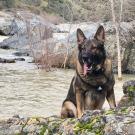
Life for Miro, a 5-year-old German shepherd, has been what his owner describes as an “emotional roller coaster” over the past two years. Several peaks and valleys have dotted his metaphorical landscape as he has gone from premiere fitness to dealing with injuries and disease. But a clinical trial at the UC Davis veterinary hospital may have put him back on a positive track.
The UC Davis School of Veterinary Medicine recently received an additional $75,000 grant from the Petco Foundation to continue its support of pet cancer treatments at the school’s veterinary hospital.
Daisy, an 8-year-old female collie/terrier mix, grew up in Malibu, so she loves the beach. She’s always been a well-seasoned beachgoer, prepared for anything that might come her way. But a recent trip to Pacifica Beach proved too much to handle after she ingested something that severely upset her system, nearly killing her.
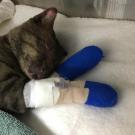
The UC Davis veterinary hospital has treated hundreds of animals over the years that were burned in wildfires. Every year, there is at least one that everyone at the hospital remembers. This year, one of the most memorable was Ned, a semi-feral cat who was rescued from the property he calls home a few days after the LNU Lightning Complex Fire swept through and destroyed everything. This week, Ned was finally discharged after being hospitalized for three months.
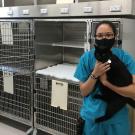
Sick cats at UC Davis now have a more dedicated space to recover. The Small Animal Clinic at the school’s veterinary hospital has opened a feline treatment and housing suite to better care for sick and injured cats. The new facility combines a hospitalization ward with examination and treatment space. Veterinarians and technicians laud the suite as the most efficient use of space and time in order to care for multiple hospitalized cats.
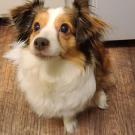
Scruffles, a 9-year-old female Shetland sheepdog, was referred to the UC Davis veterinary hospital after her white blood cell count continued to increase. The Oncology Service performed complete blood count tests to gain a better understanding of Scruffles’ condition, as well as a test called flow cytometry, which helped determine if Scruffles was dealing with a cancer of her bone marrow (leukemia).
Orphaned kittens experience more stress than kittens cared for by their mothers, according to a new UC Davis study. Understanding the effect of being orphaned on responses to stressful events could improve their care.
So, what do a local university patron, four veterinary hospital services, a veterinary resident, a newly graduated Animal Science major, and dozens of faculty, staff, and student caregivers have in common? All of these UC Davis entities came together to save the life of a tiny kitten barely big enough to fit in your hand.
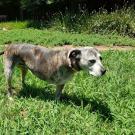
Kita, a 10-year-old female American Staffordshire terrier, began limping on her front right leg in November 2019. Shortly thereafter, she refused to walk at all. Her primary veterinarian diagnosed her with osteosarcoma in the leg. Her owners chose to have the leg amputated. Following amputation, Kita was referred to the UC Davis veterinary hospital for further recommendations on treating metastasis of the tumor.
Wildlife Officer Paul Cardoza, a game warden with the California Department of Fish and Wildlife (CDFW), refers to his partner, K-9 Kilo, as his most trusted piece of equipment. The pair have been together for 11 years. So, when Kilo, a 13-year-old male German shepherd/Belgian Malinois mix, was having trouble walking and supporting himself on his hind limbs, Cardoza sought out the specialists at the UC Davis veterinary hospital.