Raw or unpasteurized cows’ milk from U.S. retail stores can hold a huge amount of antimicrobial-resistant genes if left at room temperature, according to a new study from UC Davis researchers.
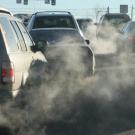
Researchers at the University of California, Davis, have found a link between traffic-related air pollution and an increased risk for changes in brain development relevant to neurodevelopmental disorders.
On April 9, 2020, faculty experts from the UC Davis School of Veterinary Medicine’s (SVM) One Health Institute and the California National Primate Research Center led a virtual town hall to present updates on SVM’s COVID-19 response efforts.
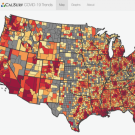
Researchers at the University of California, Davis, have developed a new web application that allows users to track COVID-19 cases and testing across the globe.
PREDICT will provide emergency support to other countries for outbreak response including technical support for early detection of SARS CoV-2, the virus that causes the disease COVID-19, through a six-month extension from the U.S. Agency for International Development, or USAID, effective April 1.
As SARS-CoV-2 has spread around the world, its transmission rate has varied alongside variations in its genome, according to researchers at the University of California, Davis.
Clinical pathologists, infectious disease physicians and scientists at the UC Davis Medical Center, School of Medicine, California National Primate Research Center and Center for Immunology and Infectious Diseases (a unique partnership between the Schools of Medicine and Veterinary Medicine) are collaborating on new reagents, diagnostic tests and a vaccine for the COVID-19 coronavirus. Their goal is to unravel the biology and infectious pathology of this new virus, and to develop means for prevention and ultimately treatment.
Dr. Niels Pedersen, a distinguished emeritus professor at the UC Davis School of Veterinary Medicine and a renowned expert on infectious and immunologic diseases in dogs and cats, says our pets are not at risk of contracting COVID-19.
As we start a new decade, the UC Davis School of Veterinary Medicine is participating in a national campaign to promote the value of One Health, a collaborative approach to finding new solutions that benefit animal, human and environmental health.
Microbes living in the rectum could make a difference to the effectiveness of experimental HIV vaccines, according to research led by Smita Iyer, assistant professor at the UC Davis Center for Immunology and Infectious Diseases and School of Veterinary Medicine.