On March 20, 2026, the UC Davis veterinary hospital hosted the 47th annual Gerald V. Ling Veterinary Intern and Resident Research Symposium (VIRRS). The day-long event featured short presentations of research findings from house officers (residents, fellows, interns) to fellow house officers, faculty, staff, students, and guests.
When the H5N1 highly pathogenic avian influenza virus was discovered on a poultry farm in Asia in 1996, there was little indication that it would become so widespread and so destructive. Within 30 years, it reached every continental region except Oceania, infecting more than 400 million poultry, tens of thousands of elephant seals and sea lions, about 1,000 people and many other mammals and wild birds.
Pinnipeds, which include seals and sea lions, have been hit unusually hard by the virus.
This award recognizes an SOT member who has made seminal and substantial scientific contributions to the understanding of the science of toxicology and is actively involved in toxicological research.
In recognition of a long-standing career of influential scientific contributions to neurotoxicology and her seminal work defining how environmental exposures and gene–environment interactions disrupt nervous system development and function, Pamela J. Lein, PhD, is presented with the 2026 SOT Distinguished Toxicology Scholar Award.
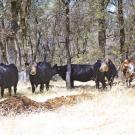
Previous studies have shown that adding red seaweed (Asparagopsis taxiformis) to beef cattle rations could reduce methane – a potent greenhouse gas – produced by the animals by up to 90%.
But those results were in controlled settings – not wide-open rangelands.
“While each patient has a unique story, I am always drawn to the bond between a family and their older parrot or tortoise that was raised by my client’s grandparents,” stated Dr. Krista Keller, discussing memorable moments in her career as an exotic animal veterinarian.
On March 4, the UC Davis Weill School of Veterinary Medicine welcomed donors, students, faculty and school leadership for our annual Evening of Gratitude, a celebration of the philanthropic support that makes scholarship and fellowships possible.
The California Animal Health and Food Safety Laboratory (CAHFS) and the Department of Pathology, Microbiology & Immunology have welcomed Dr. Roberto Olivares as an assistant professor of clinical diagnostic pathology, effective March 1, 2026.
A major five-year study on California’s Central Coast led by the U.S. Food and Drug Administration and the Western Center for Food Safety at the University of California, Davis, is helping scientists better understand how harmful bacteria can move through the environment.
The top-ranked UC Davis Weill School of Veterinary Medicine may be known for its specialty care, but they also offer primary care for your animals. The Primary Care Service at the UC Davis Veterinary Medical Teaching Hospital, or VMTH, provides treatment to make sure that your canine or feline friend receives the routine care they need.