Dr. Karyn Bischoff joined CAHFS-Davis as faculty toxicologist and Toxicology Section Lead in May 2025.
She received her DVM from the University of Illinois Urbana-Champaign, followed by a residency in Veterinary Toxicology and MS in Veterinary Pathology at Oklahoma State, and an MS in Public Health from Cornell University. She is board certified in Veterinary Toxicology and previously served as the Director of Analytical Toxicology at the New York State Animal Health Diagnostic Laboratory from 2004-2025 prior to joining CAHFS.
The California Animal Health and Food Safety Laboratory (CAHFS) and the Department of Pathology, Microbiology & Immunology have welcomed Dr. Roberto Olivares as an assistant professor of clinical diagnostic pathology, effective March 1, 2026.
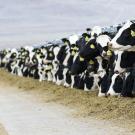
The California Department of Food and Agriculture (CDFA) is investigating the possible introduction of highly pathogenic avian influenza (HPAI) at three dairy farms in the Central Valley.
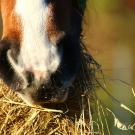
Although no cases of botulism have been reported in horses in California related to a recent outbreak, the state has been involved in the investigation through the California Animal Health and Food Safety (CAHFS) Laboratory at the University of California, Davis, School of Veterinary Medicine.
Dr. Ashley Hill, DVM, MPVM, PhD, has been appointed as the Associate Dean for Veterinary Diagnostic Laboratory Operations and Director of the California Animal Health and Food Safety Laboratory at the UC Davis School of Veterinary Medicine.
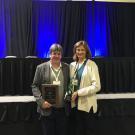
Congratulations are due to Drs. Beate Crossley and Francisco Uzal who were recently honored with distinguished awards at the annual meeting of American Association of Veterinary Laboratory Diagnosticians (AAVLD) and the United States Animal Health Association (USAHA). Crossley and Uzal are both faculty members with the school’s California Animal Health and Food Safety Laboratory System (CAHFS).
Three UC Davis School of Veterinary Medicine faculty members were recently honored by the American College of Veterinary Pathologists. Drs. Linda Lowenstine and James MacLachlan were recognized as a distinguished members, while Dr. H. L. Shivraprasad was recognized as an honorary member.
Equine herpesvirus-1 (EHV-1) is relatively widespread in horses; approximately 60 percent of healthy horses harbor the virus. While the more common form of EHV-1 can cause respiratory illness as well as abortion, it is rarely fatal. However, a neurological strain of this virus, also known as equine herpes myeloencephalopathy (EHM), can kill 30 to 50 percent of affected horses. That's why it is critical for the California Animal Health & Food Safety Laboratory to be able to use PCR testing to differentiate between strains.
Raising backyard chickens has become a fun hobby for many urban dwellers in the San Joaquin Valley, but a devastating poultry disease currently raging in Southern California could put those birds and others in jeopardy.