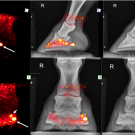
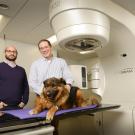
On August 5, UC Davis veterinary radiologist Dr. Mathieu Spriet presented "New Equine Imaging Options with Standing PET at UC Davis," an informative webinar to update veterinarians on the latest in positron emission tomography (PET) for horses.
UC Davis veterinarians have found that a cat’s DNA alters how it responds to a life-saving medication used to treat hypertrophic cardiomyopathy, a heart disease that affects 1 in 7 cats.
Chlamydia is the most common sexually transmitted infection in the U.S. New work from the Center for Immunology and Infectious Diseases at UC Davis shows that it may be feasible to create a vaccine against the bacterial infection.
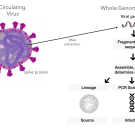
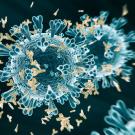
Genomic surveillance programs have let scientists track the coronavirus over the course of the pandemic. By testing patient samples, researchers are able to diagnose COVID-19. But they’re also able to use genetic changes in the virus to recreate its travel routes and identify the emergence of new viral variants.
Genome sequencing of thousands of SARS-CoV-2 samples shows that surges of COVID-19 cases are driven by the appearance of new coronavirus variants, according to new UC Davis research.
The UC Davis School of Veterinary Medicine has topped Blue Ridge Institute for Medical Research’s ranking of U.S. Schools of Veterinary Medicine, handily capturing the top spot for the twelfth year in a row.
A new study led by UC Davis shows how SARS-CoV-2, the virus that causes COVID-19, and SARS-CoV-1, which caused the 2003 SARS outbreak, are related to each other.
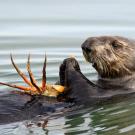
Heart disease is a killer threat for southern sea otters feasting on domoic acid in their food web, according to a study led by the University of California, Davis.
In a promising result for the success of vaccines against COVID-19, rhesus macaque monkeys infected with the human coronavirus SARS-CoV-2 developed protective immune responses that might be reproduced with a vaccine. Results suggest lasting immunity after infection.
UC Davis is taking a major leap forward in training the next generation of scientists engaged in basic and translational cancer research for animals and humans, thanks to a prestigious National Institutes of Health (NIH) T32 grant.