When Sarah Lindley found a lump near her dog Bucky’s tooth, she didn’t think it was a problem. The lively husky mix, which she and her partner, Tom Yuzvinsky, consider part of the family, didn’t appear to be in pain. Still, she scheduled an appointment with her local veterinarian on the Central Coast.
“At first we thought something was stuck in his gums and he might lose a tooth,” Lindley said. “Then the biopsy came back as cancerous.”
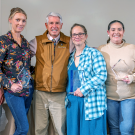
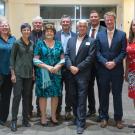
The Dean’s Staff Awards were presented in a joint ceremony with the Faculty Award recipients on November 14. Instituted through the SVM People First strategic initiative, this inaugural award is the first SVM set to shine a light specifically on staff.
Faculty members were honored at the inaugural Stars of SVM Staff and Faculty Award Reception on Thursday, November 14, 2024. Each of the recipients exemplify excellence in supporting the mission of the school.
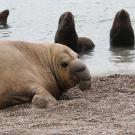
The sounds of barking elephant seals are again in the air along the breeding grounds of Península Valdés, Argentina—but it’s quieter. Roughly a year after a massive outbreak of H5N1 highly pathogenic avian influenza killed more than 17,000 elephant seals, including about 97% of their pups, scientists estimate that only about a third of the elephant seals normally expected here returned.
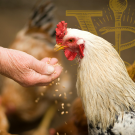
As highly pathogenic avian influenza (HPAI) continues to spread throughout the world, including on California dairy farms recently, experts on the subject from the UC Davis School of Veterinary Medicine have taken great strides to educate the public and industry partners on the subject.
The school had an incredible time hosting nearly 300 alumni and friends the last weekend in October to celebrate milestone reunions, outstanding achievements, and so much more. Classmates enjoyed reconnecting, hearing stories and memories and learning about all the new and exciting things happening at the UC Davis School of Veterinary Medicine.
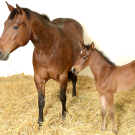
Researchers at the UC Davis School of Veterinary Medicine marked a milestone in equine assisted reproductive technologies with the first successful use of frozen-thawed sperm for in vitro fertilization (IVF) production of equine embryos. These promising results, just published in Theriogenology, have the potential for broader clinical applications, as well as valuable opportunities to study fertilization and embryo development.