Since 2012, the Veterinary Institute for Regenerative Cures (VIRC) at the UC Davis School of Veterinary Medicine (SVM) has been committed to transforming the SVM into a national leader for veterinary regenerative medicine. VIRC has established laboratory techniques and animal models that have been used to study regenerative therapies for veterinary and human medicine. It has characterized equine, canine and feline stem cells isolated from different tissues with a focus on adult-derived mesenchymal stem cells.
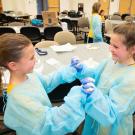
Spending the day learning about surgical procedures or animal behaviors sounds like the typical schedule for a graduate student at the UC Davis School of Veterinary Medicine. But this summer, elementary-aged kids were the ones finding out what it takes to become “animal doctors,” thanks to the first-ever Youth Vet Med Camp.
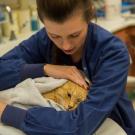
Researchers at the University of California, Davis Veterinary Medical Teaching Hospital recently performed a study to determine if intensive medical management offered a viable treatment alternative to surgery for feline patients with severe deep ulcerative keratitis.
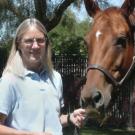
Farrin Peterson, 26, from Roseville in Northern California, is an honors student in her fourth year of studies at the University of California, Davis School of Veterinary Medicine. She's also named to ride Chocolate Goddess for trainer Aggie Ordonez in Friday's second race at Del Mar.
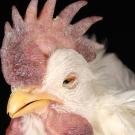
Raising backyard chickens has become a fun hobby for many urban dwellers in the San Joaquin Valley, but a devastating poultry disease currently raging in Southern California could put those birds and others in jeopardy.
Dr. Susan Stover has been funded frequently by Grayson-Jockey Club Research Foundation. Her goal in recent research is the prevention of musculoskeletal injuries in equine athletes.
A somewhat mysterious, sometimes fatal muscle-related disease in Quarter Horses is getting a little clearer. Researchers recently determined that immune-mediated myositis (IMM) is due to a genetic mutation encoding a protein that’s expressed in adult equine muscle.
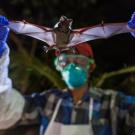
Scientists have identified a novel ebolavirus in free-tailed bats in Sierra Leone, providing the strongest evidence to date that bats are the natural hosts of these viruses. The new virus, called Bombali virus, was found in insectivorous bats roosting inside people’s houses. There is currently no evidence of human infection or spillover of this virus.
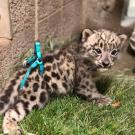
UC Davis veterinary specialists are helping a baby snow leopard, born in May at the Sacramento Zoo, with a condition known as “swimmer’s syndrome,” a developmental deformity that forces animals to paddle their legs like turtles when they try to walk.
There are recent concerns about reports of heart disease in some dogs eating commercial diets. UC Davis Nutrition Support Services provides this statement to offer guidance to owners/veterinarians regarding the nutritional aspects of this condition and best practice information regarding blood testing for taurine status.
While part of UC Davis seems to operate at a slower pace in the summer, the School of Veterinary Medicine (SVM) is buzzing with activity as we host six different pre-veterinary programs for elementary to college students. This outreach is designed to show younger kids what being a veterinarian is like and to prepare older students for careers in veterinary medicine and research.
The U.S. Food and Drug Administration recently issued an alert about reports of canine dilated cardiomyopathy (DCM) in dogs eating certain pet foods containing peas, lentils, other legume seeds, or potatoes as main ingredients. UC Davis is leading the investigation between these dog diets and heart disease.
Pet foods containing peas, lentils, other legume seeds or potatoes as main ingredients may be linked to cases of canine dilated cardiomyopathy (DCM) in dogs, according to an alert to pet owners this week from the Food and Drug Administration.
To prevent the next pandemic, pinpoint it at the source. That’s the idea behind PREDICT, a global surveillance program that has spent almost 10 years hunting for new viruses that could spill over from vulnerable wildlife to humans.